

Description
Mandarin Ducks
The Mandarin Duck (Aix galericulata) is a close relative of the North American Wood Duck. These small waterfowl are known for their colorful appearance, cultural significance, and elaborate courting rituals.
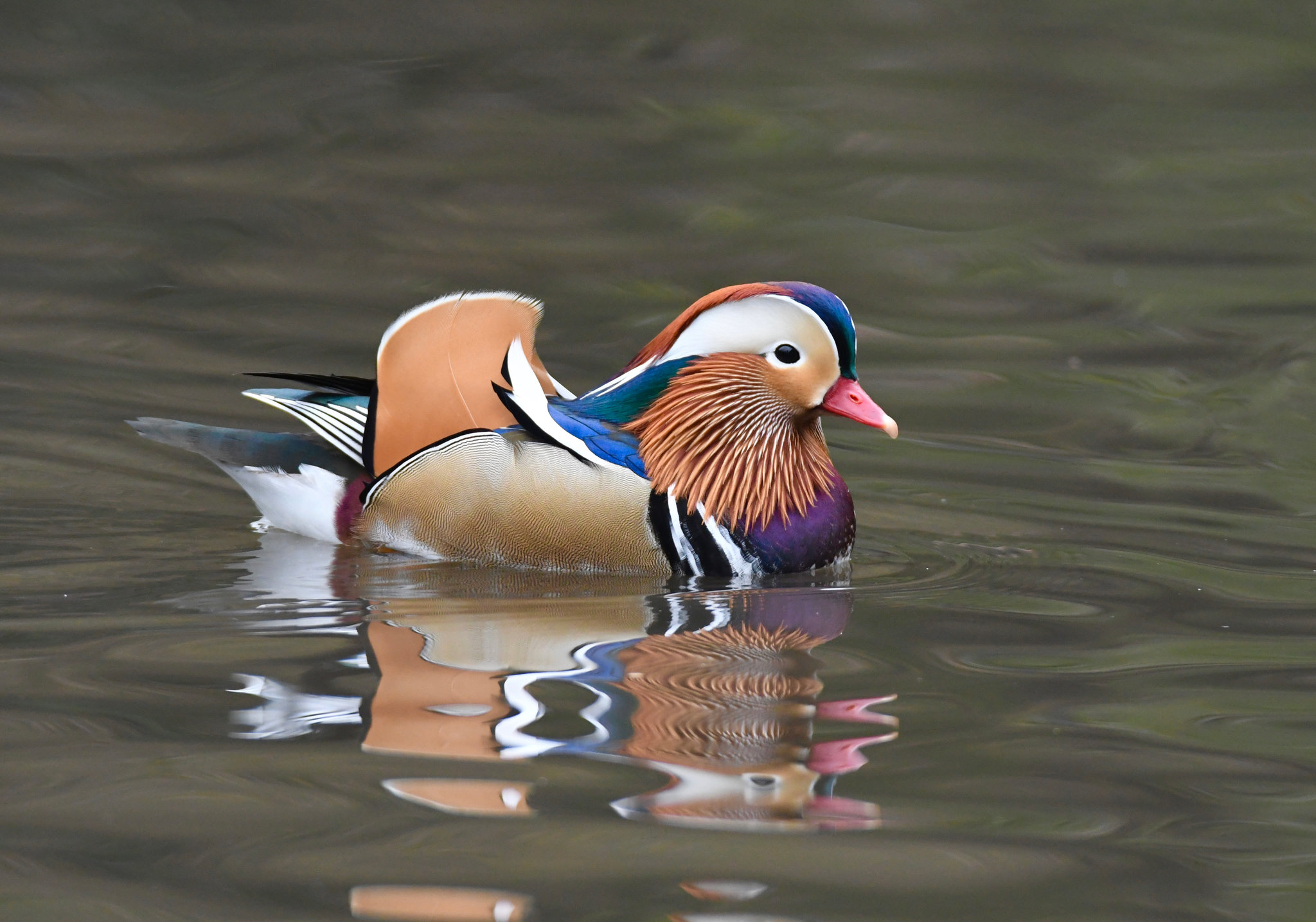
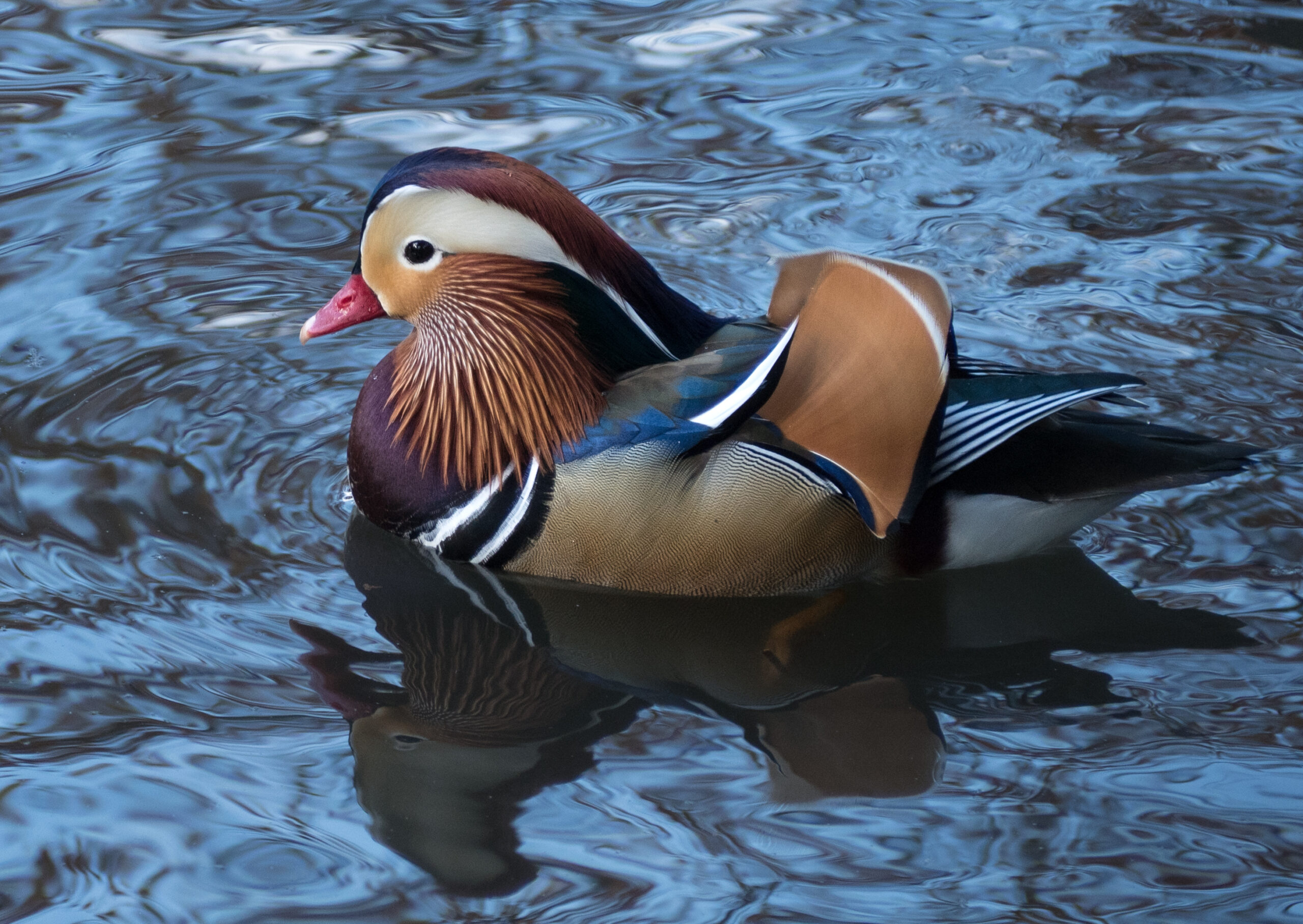
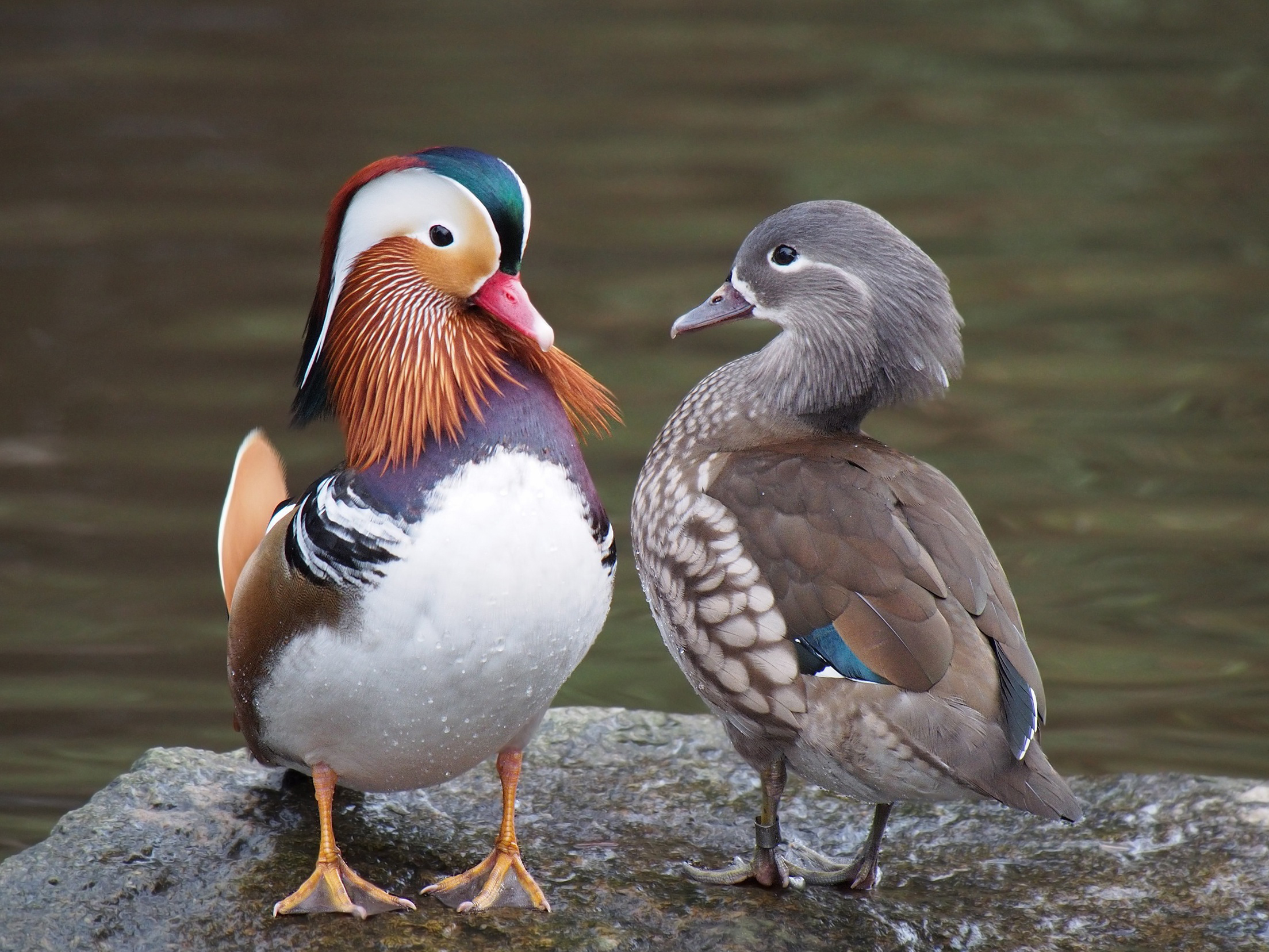
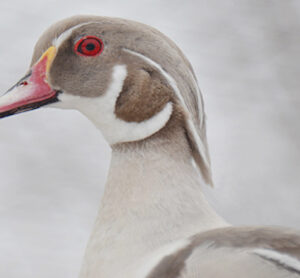
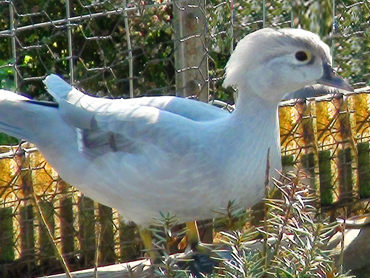
The male Mandarin Duck is one of the world’s most beautiful duck breeds and one of the easiest to identify. Its stunning colors have been a favorite subject in oriental art throughout the ages. Males sport a long blue, green and copper crest. A white area of feathers curve around its dark eyes, and tapers to a thin line at the tip of his crest. The rest of his face is a buff-orange which extends down into the orange-gold feathers to form a mane around its neck. The male Mandarin Duck has mainly olive-brown feathers on his upper parts and tail, and a purple colored breast. You can see a shimmer of iridescent blue on the back and side feathers. Orange-gold wings turn up and form “sails” when seated or swimming. The male Mandarin has a red bill with a pink or white tip, yellow feet and legs. During molting the male looks similar to the female, but still has a red bill. Female mandarin ducks are much less colorful than the males. The female Mandarin Duck hard to tell apart from the female Wood Duck. The Mandarin female is lighter and has more gray on her body. Mandarin Ducks are hole-nesting ducks and have claws that allow them to perch on tree branches.
Mandarins have larger eyes than any other waterfowl in relation to their bodies, this helps them to be able to navigate through the trees and wooded areas in their natural habitat.
Mandarin ducks are native to southeast Russia, China, Japan, and Korea and have long been a symbol of love and fidelity for couples in those areas. In the Orient, it is common for a pair of figurines of Mandarin Ducks to be given to newlyweds, and they are used in feng shui to help maintain a healthy relationship.
Mandarin Ducks perform a unique and elaborate courtship ritual which includes shaking, drinking, bill dipping, whistling, loud barks, and preening. Mandarin Ducks raise their crest and orange “sail” feathers to show off and make an unusual whistling sound during courtship. Mandarin Ducks are sexually mature at one year. Despite being monogamous, mandarin duck pairs do not share parenting duties. Once their ducklings are hatched, the male will leave and the female will rear the ducklings on her own. Mandarins are known to lay their eggs high up in a hole in a tree. After hatching, Mandarin ducklings will leap from the nest and free fall to the ground — sometimes up to 30 feet — in order to follow their mother to water.
Mandarins do well in captivity as long as they are kept in covered aviaries or pinioned. They fly very well and can travel several hundred miles in a day. 500 miles in a 24 hour period. Although the wild population is suffering, there is a healthy captive population.





Swans Farm –
★★★★★
“Absolutely stunning Mandarin Ducks with vibrant colors and excellent health. The birds arrived safely and adapted quickly to our pond. Very professional service from Swan Farms.”
— Michael R., Dallas, Texas
April 2026
Swans Farm –
★★★★★
“Beautiful and healthy Mandarin Ducks exactly as described on the website. Communication was excellent throughout the process, and delivery was smooth.”
— Ashley T., Portland, Oregon
March 2026
Swans Farm –
★★★★★
“Very impressed with the quality of these Mandarin Ducks. Bright plumage, active birds, and outstanding customer support from start to finish.”
— Daniel K., Lexington, Kentucky
February 2026
Swans Farm –
★★★★★
“Our Mandarin Ducks arrived in perfect condition and became an instant attraction on our property. Swan Farms handled everything professionally.”
— Rebecca M., Charleston, South Carolina
January 2026
Swans Farm –
★★★★★
“Healthy ornamental ducks with beautiful coloration and calm temperament. Shipping was organized professionally, and the birds settled in immediately.”
— Steven H., Charlotte, North Carolina
December 2025